|
|
 |
What are the definitions of the various skin features and how are the features detected?
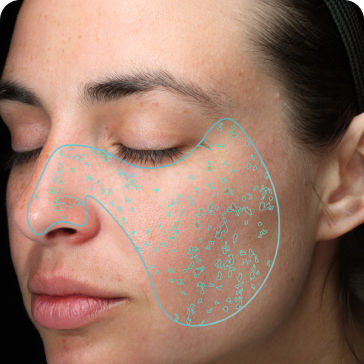
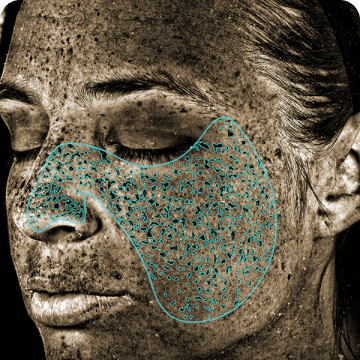
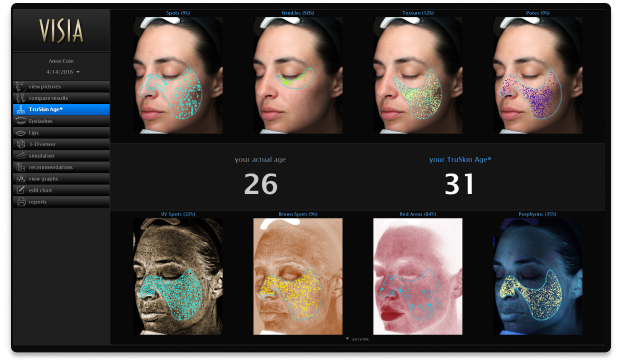
Spots: Spots are typically brown or red skin
lesions including freckles, acne scars,
hyper-pigmentation and vascular lesions.
Spots are distinguishable by their distinct color
and contrast from the background skin tone.
Spots vary in size and generally have a
circular shape.
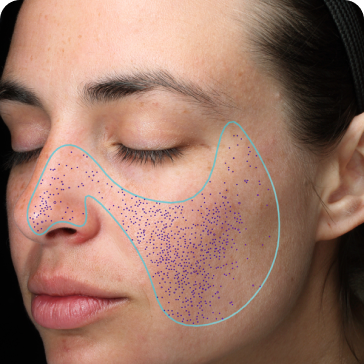
Pores: Pores are the circular surface openings
of sweat gland ducts. Due to shadowing, pores
appear darker than the surrounding skin tone
and are identified by their darker color and
circular shape. The VISIA system distinguishes
pores from spots based on size; by definition,
the area of a pore is much smaller than a spot.
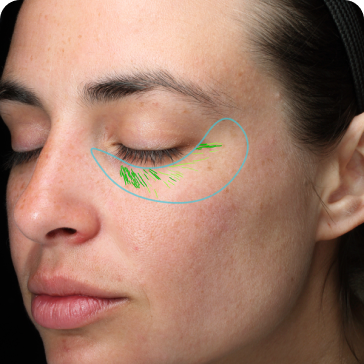
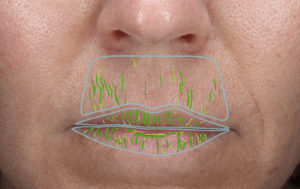
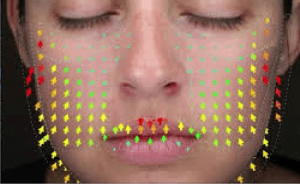
Wrinkles: Wrinkles are furrows, folds or
creases in the skin, which increase in
occurrence as a result of sun exposure, and
are associated with decreasing skin elasticity.
This skin feature has the greatest variability
from image to image as it is highly dependent
upon the facial expression of the client.
Wrinkles are identified by their characteristic
long, narrow shape.
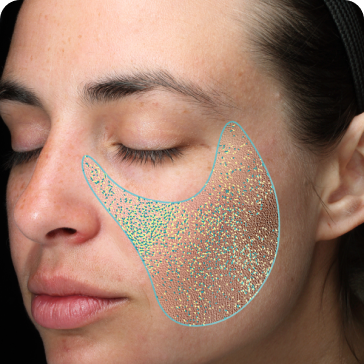
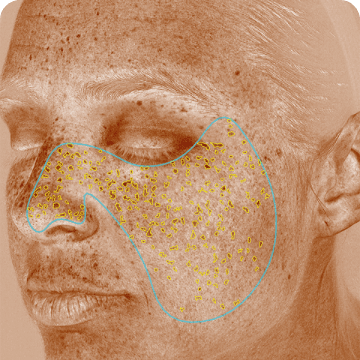
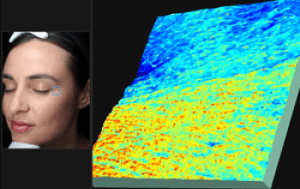
Texture: Texture is primarily an analysis of
skin smoothness. Texture measures skin color and
smoothness by identifying gradations in color from
the surrounding skin tone, as well as peaks
(shown in yellow) and valleys (shown in blue)
on the skin surface that indicate variations in
the surface texture.
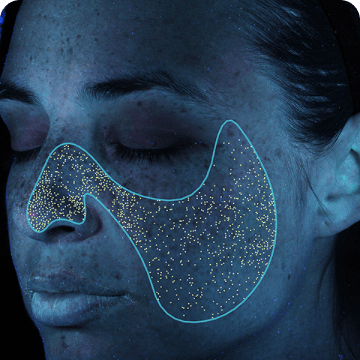
Porphyrins: Porphyrins are bacterial excretions
that can become lodged in pores and lead to
acne. Porphyrins fluoresce in UV light and
exhibit circular white spot characteristics.
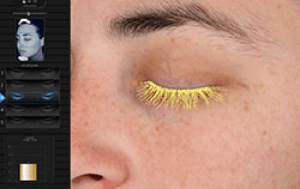
UV Spots: UV spots occur when melanin
coagulates below the skin surface as a result of
sun damage. UV spots are generally invisible
under normal lighting conditions. The selective
absorption of the UV light by the epidermal
melanin enhances its display and detection
by VISIA.
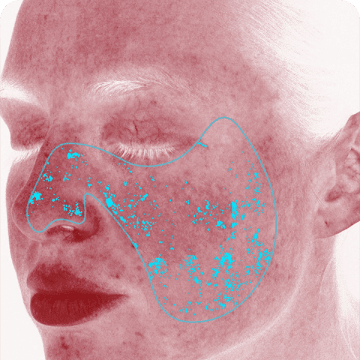
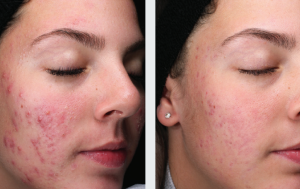
Red Areas: Red Areas represent a potential variety of conditions, such as acne, inflammation, Rosacea or spider veins. Blood vessels and hemoglobin contained in the papillary dermis, a sub-layer of skin, give these structures their red color, which is detected by the RBX Technology in VISIA. Acne spots and inflammation vary in size but are generally round in shape. Rosacea is usually larger and diffuse compared to acne, and spider veins usually are short, thin and can be interconnected in a dense network.
Brown spots: Brown Spots are lesions on the skin such as hyper-pigmentation, freckles, lentigines, and melasma. Brown Spots occur from an excess of Melanin. Melanin is produced by melanocytes in the bottom layer of the epidermis. Brown Spots produce an uneven appearance to the skin, and are detected in VISIA by RBX
What factors influence the results of the image session?
A number of factors contribute to the actual
scores generated by the VISIA complexion
analysis algorithms, including the condition of
the skin (cleaned vs. fresh make-up, old
make-up, time-of-day), head registration within
the booth, facial expression (particularly for
wrinkles), stray hair, glare areas resulting from
oily skin, etc. Note that the percentile scores
were generated for subjects with cleaned skin
prior to their imaging session, so results may
vary if make-up is NOT removed prior to a
patient's VISIA session. See Canfield Imaging
Systems' application notes, Improving the
Quality and Reproducibility of Captured
Images.
What is the definition for each of the three types of skin conditions? How does VISIA use this information?
"Clean" is defined as skin that has been
recently cleansed and without make-up or skin
conditioners applied, "Fresh Make-up" is
defined as make-up recently applied (roughly
within the past hour), "Other" covers all other
cases. No change is made in terms of either
taking the photo or in the analysis process
based upon the skin condition selected. This
information is recorded in the patient's record
for each session and allows scores to be
properly interpreted if images were captured
under different conditions session-to-session
(i.e., one time image taken with clean skin, the
next time with make-up). Also, images that are
"clean" can be considered as valid input to
further build the database.
Which data display option is best for our practice to use?
Three data display options are available
depending upon the needs and preferences of
the practice, and can either be selected from
within VISIA's Session Options tab or by right
clicking on any data display bar or graph.
Feature Counts: Feature Counts provide a
count of the number of discrete instances of
the feature being evaluated, without regard to
the size or intensity of each instance. Feature
Counts can be used to track treatment progress
when a reduction in the number of discrete
instances of a particular feature is desired.
Absolute Scores: Absolute Scores provide a
comprehensive measurement of the impact
that the feature has on the client's complexion.
Absolute Scores factor in the total size and
area as well as intensity of detected instances
of the feature being analyzed. Absolute Scores
can be used to track treatment progress when
the size and intensity of instances of a feature
are the most relevant indicator of treatment
effectiveness.
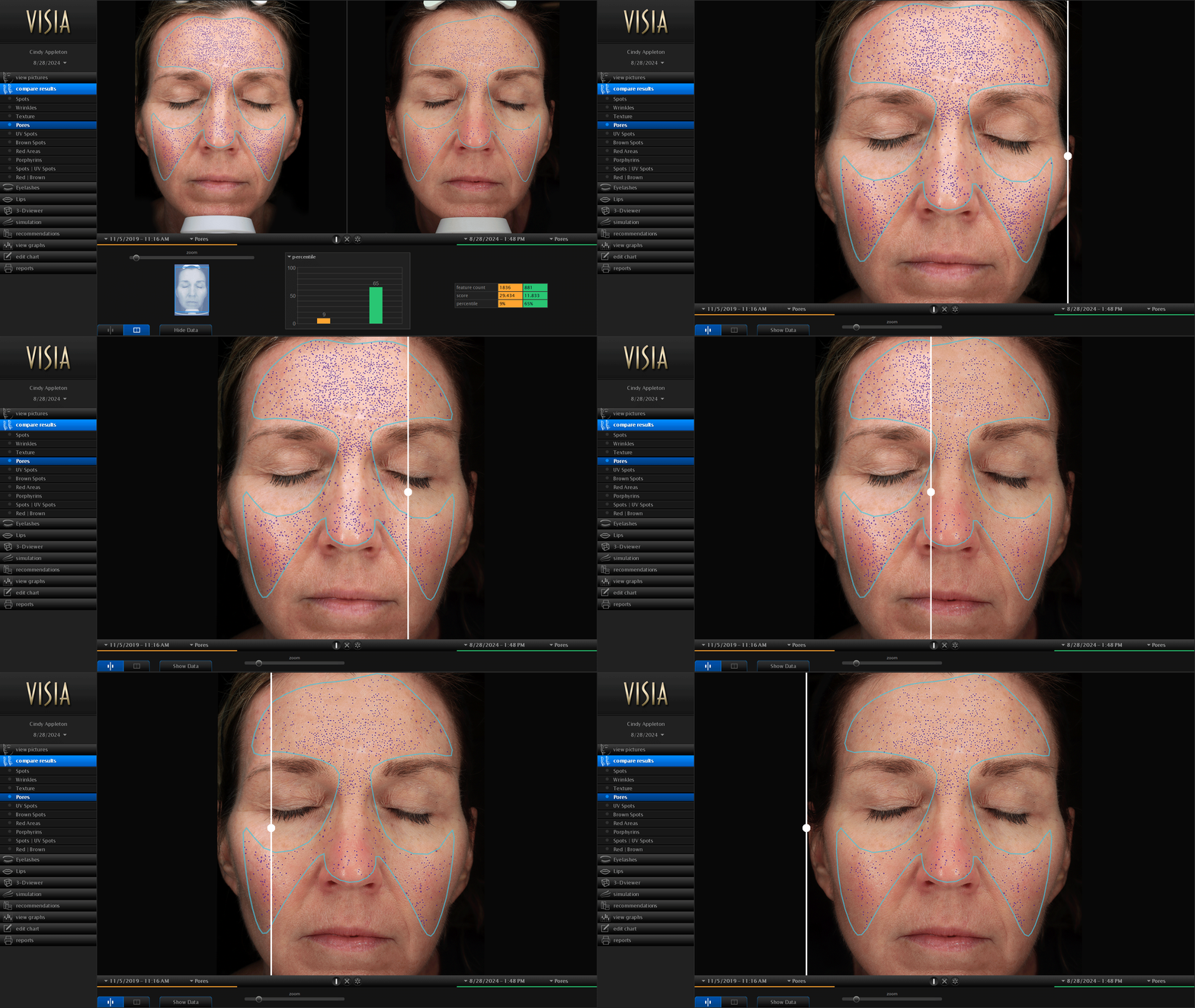
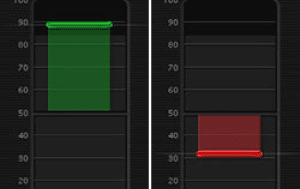
Percentiles: Percentiles provide a context in
which to evaluate a client's complexion
analysis results by presenting a comparison of
the individual's Absolute Scores to those of
people with similar characteristics. Percentiles
are useful in providing a baseline assessment
of the overall condition of the client's
complexion. This display option is not
available for UV image-based features
(porphyrins or UV spots).
What clinical methods were used to validate VISIA?
The Procter & Gamble complexion analysis
software used in VISIA was developed in the
late 1990s and has undergone extensive lab
and field-testing. Since 1998, P&G has
deployed their complexion analysis software
as a sales tool to promote their Olay and SKII
brands of cosmetic products. As such, the P&G
software was never intended for clinical trials.
However, the VISIA complexion analysis
algorithms themselves are supported by an
extensive set of research papers describing the
analysis techniques and results across various
skin types.
What is the wavelength used for the UV photography?
The wavelength used by the UV flashes is 365 nm (peak).
Should the patient's eyes be open or closed when the picture is taken?
It is strongly recommended that the eyes be
closed for the UV photos given the intensity of
the UV flashes. For standard photos, the eyes
can be either open or closed, although more
aesthetically pleasing images are achieved with
the eyes open. Because the mask is created
using the standard photo (in which the
patient's eyes are typically open), there is no
need to be concerned that eyelashes will be
included inadvertently in UV analysis, even
though the patient's eyes are closed.
Why isn't the porphyrin count reduced after cleansing?
There are several potential reasons why the
porphyrin count for a particular patient may
not be reduced-or worse case, increase, after
cleansing his/her skin. First, certain types of
paper/tissue that might have been used to dry
the face after cleansing could have a high
content of lint particles. Lint will actually
fluoresce under UV light. Greg Hillebrand, a
subject matter expert at P&G on the subject,
offers the further explanation that "in some
situations, the true porphyrin fluorescence of
an initial image could be quenched by
something that the subject had on his/her
unclean face, and then after removal of this
interfering quenching agent, a higher level of
fluorescence could be observed. Finally, the
simple cleansing of the skin with a normal
everyday facial cleanser is probably not going
to change the true number of pores that show
porphyrin fluorescence. It has been reported
that washing with a cleanser containing
benzoyl peroxide will, over time, reduce the
number of pores. Also, using strips or other
devices to physically remove the contents of
the pores will help to reduce the fluorescence
as well."
Is there correlation between porphyrins and sun damage?
According to Greg Hillebrand, Ph.D., a
recognized subject matter expert at P&G on
the subject, there may be a real correlation
between the amount of porphyrins and skin
aging as described in the following technical
excerpt that offers the best understanding we
have today on the matter: "In pilosebaceous
follicles, porphyrins are produced by
propionibacterium acnes (P. acnes) that are
normal inhabitants of the human skin and the
pilosebaceous ducts. Porphyrins are highly
fluorescent pores containing P. acnes and the
associated porphyrins appear red-orange when
facial skin is illuminated with long wavelength
UVA radiation. The intensity of the follicular
fluorescence and its extent of facial
involvement is known to be proportional to
the density of P. acnes. Porphyrin fluorescence
appears first on the nose and chin, and then
increases in incidence through adulthood and
declines after the age of 50, possibly reflecting
the rate of sebum secretion. Porphyrins may
also have cytotoxic and comedogenic
potential. With exposure to the sun,
porphyrins can release singlet oxygen that in
turn can oxidize lipids (lipid peroxidation) in
the skin yielding irritating and cytotoxic lipid
peroxides that can cause skin damage. Thus,
the presence of porphyrins in the follicular
pores may enhance or accelerate
hyperpigmentation, wrinkling and other signs
of photo-aging by sun exposure."
|
|
|